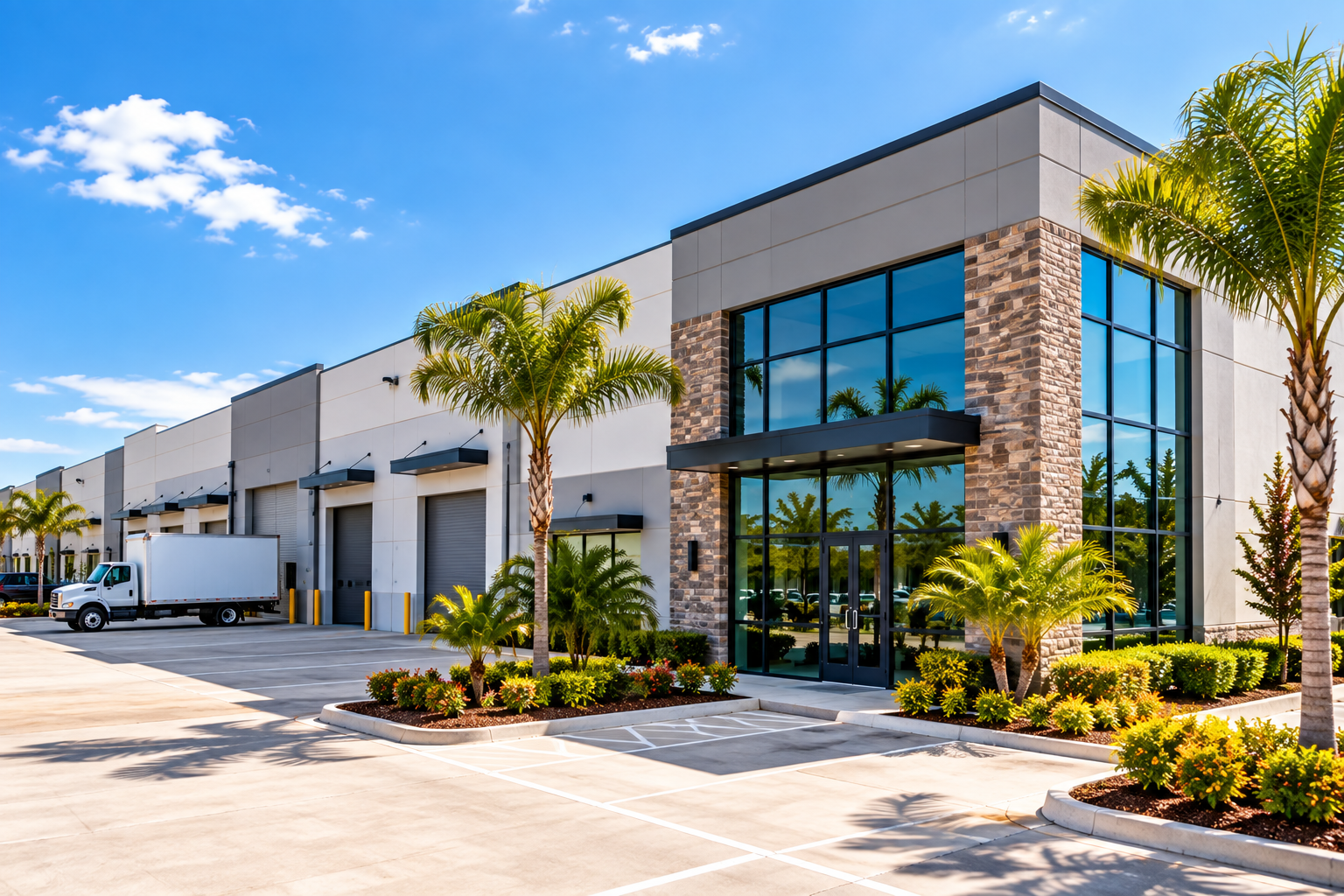
Commercial property insurance covers the physical assets your business runs on — your building if you own it, your improvements if you lease, and the equipment, inventory, furniture, and materials inside.
Walker Insurance Agency writes commercial property throughout Mobile and Baldwin County.
What Commercial Property Insurance Covers

Building — The structure, if you own it, including permanently installed fixtures and systems.
Business personal property — Equipment, inventory, furniture, tools, and supplies.
Tenant improvements and betterments — Build-out and improvements you paid for in a leased space, which your landlord’s policy will not cover.
Business income and extra expense — Lost income and continuing expenses while you cannot operate, plus the cost of operating temporarily somewhere else.
Property of others — Customer property in your care, which matters for repair shops, storage, and anyone holding goods.
Signs, fences, and outdoor property — Often at limited amounts. Worth checking if you have a substantial sign.
Flood is excluded, the same as on a homeowners policy. Commercial flood coverage is separate.
Coverage You Can Add
Equipment breakdown — mechanical and electrical failure, which a standard property policy does not cover
Spoilage — inventory lost to a power outage, which matters for any business with refrigeration
Building ordinance or law — the cost of rebuilding to current code, which frequently exceeds the value of what was there
Extended business income — income replacement that continues after you reopen, while customers come back
Utility service interruption — losses from an off-premises power, water, or communications failure
What This Means on the
Gulf Coast
Your named-storm deductible is a percentage, not a dollar amount. Most coastal commercial policies apply a percentage of the insured value when damage comes from a named storm. On a commercial building that becomes a substantial number, and it is due before the carrier pays anything. Know what yours is now, while you can still choose differently.
Business interruption is the coverage that decides outcomes here. After a hurricane, contractors are booked solid and materials are backordered. A repair that should take six weeks takes six months. Building coverage pays for the repair. Business income is what keeps you solvent while it happens, and the time limit on that coverage is the number to look at.
Extended business income matters more than owners expect. Reopening is not the same as recovering. Customers scatter after a long closure and revenue returns gradually. Extended business income keeps paying for a period after you reopen, and most policies include a modest amount that can be increased.
Utility interruption is a real coastal exposure. Power can be out for days after a storm even when your building is untouched. Most policies exclude off-premises utility failure unless you add it.
Older buildings and current code. Much of the commercial stock here predates current wind and flood construction requirements. After a significant loss, you may be required to rebuild to today’s code at considerably more expense. Building ordinance coverage addresses that gap.
Flood is excluded, and commercial flood is separate. Storm surge and rising water need their own policy. Lenders on coastal commercial property frequently require it.
What Affects Your Cost
Building construction, age, and roof condition, distance from the water, your industry and occupancy, property values and coverage limits, standard and named-storm deductibles, business income limit and time period, sprinklers, alarms, and wind mitigation features, claims history, and whether you own or lease.
Frequently Asked Questions
What does commercial property insurance cover?
What is business interruption coverage?
How does a named-storm deductible work on commercial property?
Should I insure at replacement cost or actual cash value?
Do I need commercial property insurance if I lease?
How much business income coverage do I need, and for how long?
The limit should reflect what you would lose over a realistic closure, not an optimistic one. The time period matters as much as the dollar amount — a twelve-month limit and a six-month limit price differently and perform very differently after a hurricane. We will work through your revenue and your likely rebuild timeline rather than picking a round number.
Do You Know Your Named-Storm Deductible?
Send us your current declarations page. We will tell you what your named-storm deductible actually is, whether your business income limit matches a realistic rebuild timeline, and what a different carrier would charge for the same coverage.